Recycling and Sustainability for Commercial Waste Removal Docklands
Our approach to an eco-friendly waste disposal area and a truly sustainable rubbish area in the Docklands is built on measurable targets, local collaboration and practical on-the-ground action. We work with businesses across Canary Wharf, Limehouse, and the Isle of Dogs to reduce landfill, increase material recovery and support circular-economy initiatives. By combining reliable commercial waste removal Docklands services with clear segregation and reuse pathways, we help ensure that commercial waste becomes a resource rather than refuse.Recycling percentage targets and performance
We have set an ambitious recycling percentage target of 75% diversion from landfill by 2028 for our commercial waste contracts across the Docklands. This target reflects both regional ambitions and the practical potential for higher recovery in mixed-use commercial districts. To reach this goal we measure material flows monthly, report greenhouse gas savings, and offer tailored separation guidance for each client. The target covers dry recyclables, food waste capture for anaerobic digestion, and construction and demolition materials where applicable. Local transfer stations and logistics hubs are central to delivering a low-impact commercial waste service. We route collections via nearby transfer stations and materials recovery facilities to minimise double-handling and vehicle miles. Examples of transfer hubs that serve the Docklands and East London corridor include Beckton transfer sites and Greenwich materials recovery facilities — enabling faster turnaround and higher sorting fidelity. Key operational elements include:
- Optimised route planning to reduce mileage
- Direct transfers to MRFs and specialised processing for glass, metal and organics
- Segregation at source to increase capture rates for paper, cardboard and plastic
Partnerships with charities and social enterprises
We partner with charities and social enterprises to give items a second life. From refurbished office furniture passed to community reuse centres to working IT equipment processed by refurbishment charities, these alliances reduce waste and create social value. Our commercial waste removal Docklands programmes include formal donation channels, certified decommissioning for electronics and joint drives with local not-for-profits to redistribute surplus food and supplies. These partnerships are integral to building a sustainable rubbish area where material recovery benefits both people and planet.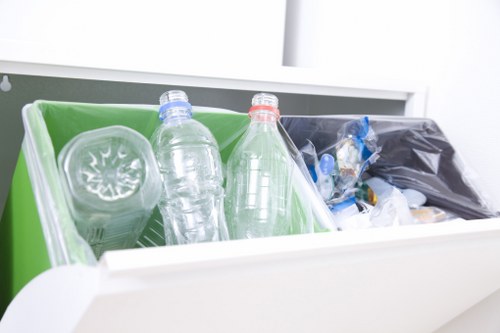 Borough coordination and waste separation is part of effective commercial recycling in Docklands. The boroughs around the Docklands — including Tower Hamlets, Newham and Greenwich — operate a mix of approaches: colour-coded bins for mixed recycling, separate food/organic collections, and dedicated glass and cardboard services for high-density commercial districts. We align our internal procedures with local collection standards to ensure compatibility with borough systems and to make it simple for businesses to comply. Advising on on-site separation and providing clear labelling helps boost compliance and increases capture rates for specific streams like glass and paper.
Low-carbon vehicles are a priority for reducing operational emissions. Our fleet includes electric and hybrid vans, and where feasible we trial hydrogen-assisted delivery trucks for heavy loads. Fleet investments are paired with telematics and route optimisation to cut unnecessary journeys. We also employ cargo-bikes for last-mile small collections within busy Docklands streets, reducing congestion and improving air quality in neighbouring commercial zones.
To create a resilient eco-friendly waste disposal area, we embed circular principles in everyday operations: reuse, repair, recycle and responsibly recover energy from residuals. Material reporting and auditing verify progress toward our recycling percentage target, and continuous improvement cycles identify new reuse partners and material outlets. Commercial waste removal Docklands clients receive waste hierarchy guidance that prioritises resource preservation and helps move more tonnes away from landfill into productive reuse streams.
How we deliver a low-carbon commercial waste service
Our commitments include:- 75% recycling rate target by 2028 with quarterly public progress summaries
- Collection routed through local transfer stations and MRFs to maximise material recovery
- Partnerships with charities for furniture, textiles and electronics reuse
- Low-carbon vans, cargo-bikes and route optimisation to minimise emissions
- Training for staff and clients on on-site segregation to increase capture rates